Vine Tying Tool Accessories: A Selection Guide for Tapetool Staples
Tapetool Staples as Essential Accessories for Vine Tying Tools
Tapetool staples are indispensable accessories for efficient vine tying in modern agriculture. Designed to work seamlessly with tapetool devices, these staples provide secure fastening for climbing plants such as grapes, tomatoes, cucumbers, and other trellised crops. Their consistent performance ensures that vines are supported without damaging stems or leaves, contributing to healthier plant growth and higher yields. By standardizing the tying process, tapetool staples help maintain uniform tension along the plant, ensuring stability across rows and preventing accidental vine slippage. This accessory transforms labor-intensive tasks into faster, more reliable operations, enhancing productivity while maintaining crop integrity.

Factors to Consider When Selecting Tapetool Staples
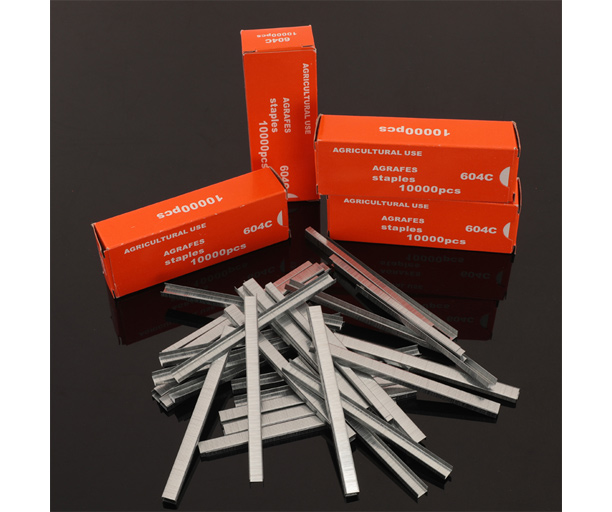
Choosing the right tapetool staples requires careful attention to several critical factors, including length, material, strength, and packaging. Staple length should match the thickness and diameter of the vine or plant stem to ensure secure support without causing damage. Material composition is equally important, as durable, corrosion-resistant metals provide long-lasting performance even under outdoor conditions with exposure to moisture or fertilizers. The staple's strength must align with the tension required to hold the plant upright, ensuring that it remains stable under wind or weight of the crop. Packaging quantity affects convenience for large-scale agricultural operations, enabling continuous workflow without frequent restocking. Paying attention to these factors guarantees that tapetool staples meet the demands of both small-scale and commercial farms efficiently.
How Do Tapetool Staples Improve Vine Management?
The use of tapetool staples dramatically improves vine management by simplifying the process of securing plants to trellises. Unlike traditional tying methods, which may involve ropes, tapes, or manual knotting, staples provide consistent, strong support in a fraction of the time. Properly selected staples prevent plant damage and reduce the likelihood of slips or breaks during the growing season. This ensures that vines maintain their intended growth pattern, allowing for better sunlight exposure, air circulation, and optimized fruit development. By streamlining the tying process, tapetool staples reduce labor intensity and enhance overall farm productivity, providing a practical solution for both greenhouse and open-field cultivation.
Applications of Tapetool Staples in Agricultural Operations
Tapetool staples are highly versatile and compatible with various vine tying devices and crop types. In vineyards, they help maintain consistent trellis alignment and support grape clusters effectively. In greenhouses, they allow vertical crops like tomatoes and cucumbers to grow with proper support without bending or collapsing. The staples' reliability ensures uniform plant spacing, simplifying maintenance activities such as pruning, fertilization, and pest management. Their consistent performance also reduces crop stress and minimizes the risk of plant damage, which is crucial for high-density planting and commercial farming operations.
Enhancing Efficiency and Crop Health with Tapetool Staples
Selecting the right tapetool staples is crucial not only for efficiency but also for maintaining plant health. Properly chosen staples ensure that vines are fastened securely yet gently, preventing stem compression or leaf injury. This leads to healthier growth, higher yield potential, and reduced labor time for adjustments or re-ties. When integrated into daily farm operations, tapetool staples provide reliable, uniform support for a wide range of climbing crops, allowing farm teams to focus on other essential cultivation tasks while maintaining optimal plant development. Their role as a high-quality accessory enhances both the operational efficiency of vine tying tools and the overall success of crop management.